Why Does Dust Come Back So Quickly After Cleaning?

Dmitrii Bamboo • November 20, 2026

Share

Home Cleaning Guide

You dust the shelves, vacuum the floors and wipe every visible surface — then a day or two later, a thin grey layer seems to have appeared again.

It can feel as though all that cleaning achieved very little.

The reality is that dust is constantly moving through a home. Some of it comes from outside, while some comes from fabrics, furniture, everyday activity and particles already sitting in places that are rarely cleaned.

Dust returning quickly does not always mean the house is dirty. Often, it means the cleaning removed what had already settled without addressing where the next layer is coming from.
Couple cleaning a bright living room to remove dust from floors and household surfaces
Dust can continue moving through a room even shortly after visible surfaces have been cleaned.
01 · DUST IS ALWAYS MOVING

Cleaning Removes Settled Dust, Not Every Particle in the Room

Dust does not remain permanently attached to one surface.

Walking through a room, opening curtains, sitting on a sofa or moving bedding can disturb fine particles and send some of them back into the air.

Those particles eventually settle again on furniture, floors, shelves and electronics.

This is why a freshly cleaned surface can sometimes develop a visible layer again surprisingly quickly.

02 · CLEANING ORDER

You May Be Cleaning in the Wrong Direction

Cleaning order makes more difference than many people realise.

If you vacuum the floor first and then dust shelves, wardrobes, lamps and window ledges, some of what you remove from those higher surfaces can simply fall onto the clean floor.

The same applies when shaking cushions, changing bedding or cleaning curtains after the rest of the room has already been finished.

Higher surfaces → Furniture → Lower surfaces → Vacuum → Floor last

Working from top to bottom reduces the chance of repeatedly dirtying areas you have already cleaned.

03 · HIDDEN SURFACES

Dust May Be Sitting in Places You Rarely Clean

Visible shelves and tables are only part of the picture.

Dust can collect on top of wardrobes, behind televisions, beneath beds, around radiators, along skirting boards and behind furniture.

These areas may remain untouched for weeks or months.

Air movement and everyday activity can gradually disturb this older dust and move it back into the room.

Tops of wardrobes and cabinets
Behind televisions and monitors
Under beds and sofas
Radiators and skirting boards
Window frames and curtain areas
04 · FABRICS

Sofas, Rugs, Curtains and Bedding Can Hold Dust Too

Hard surfaces make dust easy to see. Soft furnishings can hide much more of it.

Sofas, rugs, carpets, curtains, cushions and bedding all collect fine particles during normal use.

When people sit down, walk across a rug or shake out bedding, some of those particles can become airborne again.

Vacuuming floors alone may not be enough.

Regular attention to upholstered furniture, rugs and other textiles can help reduce some of the dust being continually redistributed around the room.

Person removing dust from a television screen during routine home cleaning
Electronics and nearby surfaces can make newly settled dust especially easy to notice.
05 · OUTDOOR DUST

Some of the Dust Is Coming From Outside

Open windows and doors allow fresh air into a home, but they can also allow fine outdoor particles to enter.

Dirt can also arrive on footwear, clothing, bags and pets before being transferred onto floors and furniture.

Homes close to busy roads, construction work or other dusty outdoor environments may notice this more quickly.

This does not mean windows should never be opened. It simply explains why some homes naturally need more frequent dusting than others.

06 · VACUUMING

Your Vacuum Cleaner Can Affect the Result

Vacuuming is one of the most useful ways to remove settled dust, but the condition of the machine matters.

An overfilled dust container, blocked filter or poorly maintained vacuum can reduce cleaning performance.

If suction has noticeably weakened, more material may remain behind in carpets, rugs and along room edges.

Check and maintain the vacuum according to the manufacturer's instructions rather than assuming the machine is working at full performance simply because it still turns on.
07 · DRY DUSTING

Sometimes You Are Moving Dust Instead of Removing It

A quick pass with a dry cloth or feather duster can make a surface look better immediately.

However, depending on the tool and technique, some fine particles may simply be pushed from one place to another or lifted back into the air.

Using a suitable cloth and cleaning method that actually captures the dust can reduce how much is redistributed around the room.

The goal is not just to make the shelf look clean — it is to physically remove the dust from the room.

08 · CLUTTER

More Objects Mean More Places for Dust to Settle

Shelves filled with decorative items, cables, books, frames and small objects naturally take longer to clean properly.

Dust can collect around and behind these items while only the most visible surface gets wiped.

Over time, those small missed areas add up.

You do not need to remove every decorative item from your home, but occasionally clearing a shelf completely makes it easier to clean the surface properly rather than simply dusting around everything.

A Better Routine

How to Keep Dust Away for Longer

Dust will always return eventually. The realistic goal is to slow down the build-up and remove more of it each time you clean.

Work from top to bottom so falling dust is collected later.
Vacuum soft furnishings as well as the floor.
Clean hidden areas periodically rather than only visible surfaces.
Maintain your vacuum cleaner so it continues working effectively.
Use methods that capture dust instead of simply pushing it into the air.
When Weekly Cleaning Isn't Enough

Sometimes the Dust Is Coming From Months of Build-Up

If the home becomes dusty again almost immediately despite regular cleaning, there may be a significant amount of older dust sitting in less accessible areas.

This is especially noticeable in homes where the tops of furniture, spaces beneath beds, radiators, skirting boards, upholstery and other overlooked areas have not been cleaned thoroughly for some time.

A deeper clean tackles more of these areas at once instead of repeatedly wiping the same visible surfaces.

That does not mean a home should remain permanently dust-free.

It simply reduces the amount of old material available to be disturbed and redistributed after cleaning.

The Bottom Line

Dust Coming Back Is Normal — Coming Back Immediately Is a Clue

A completely dust-free home is not realistic, because new particles are constantly entering and moving around the space.

But when surfaces look dusty again very quickly, it is worth looking beyond the shelf itself.

Cleaning order, hidden areas, textiles, outdoor particles and the way dust is being removed can all affect how quickly that new layer appears.

Removing more of the dust at its source usually works better than simply wiping the same visible surfaces more often.

Go Green Cleaning

Give Your Home a More Thorough Reset

Go Green Cleaning provides professional deep cleaning services across Dublin, Kildare and Meath for homes that need more than routine surface cleaning.

A deep clean can help tackle dust in the areas that everyday cleaning often misses, including furniture edges, skirting boards, accessible hidden spaces and heavily used rooms.

Deep Cleaning Get a Free Quote →

By Dmitrii Bamboo • November 18, 2026
Wondering why your kitchen cabinets still feel sticky after cleaning? Learn how cooking grease builds up, where it hides and how to remove it properly.
Cosy, neatly made guest bedroom ready for Christmas visitors
By Go Green Cleaning • November 16, 2026
Get your guest room mattress ready for Christmas with this simple airing, vacuuming and deep-clean checklist for homes in Dublin, Kildare and Meath.
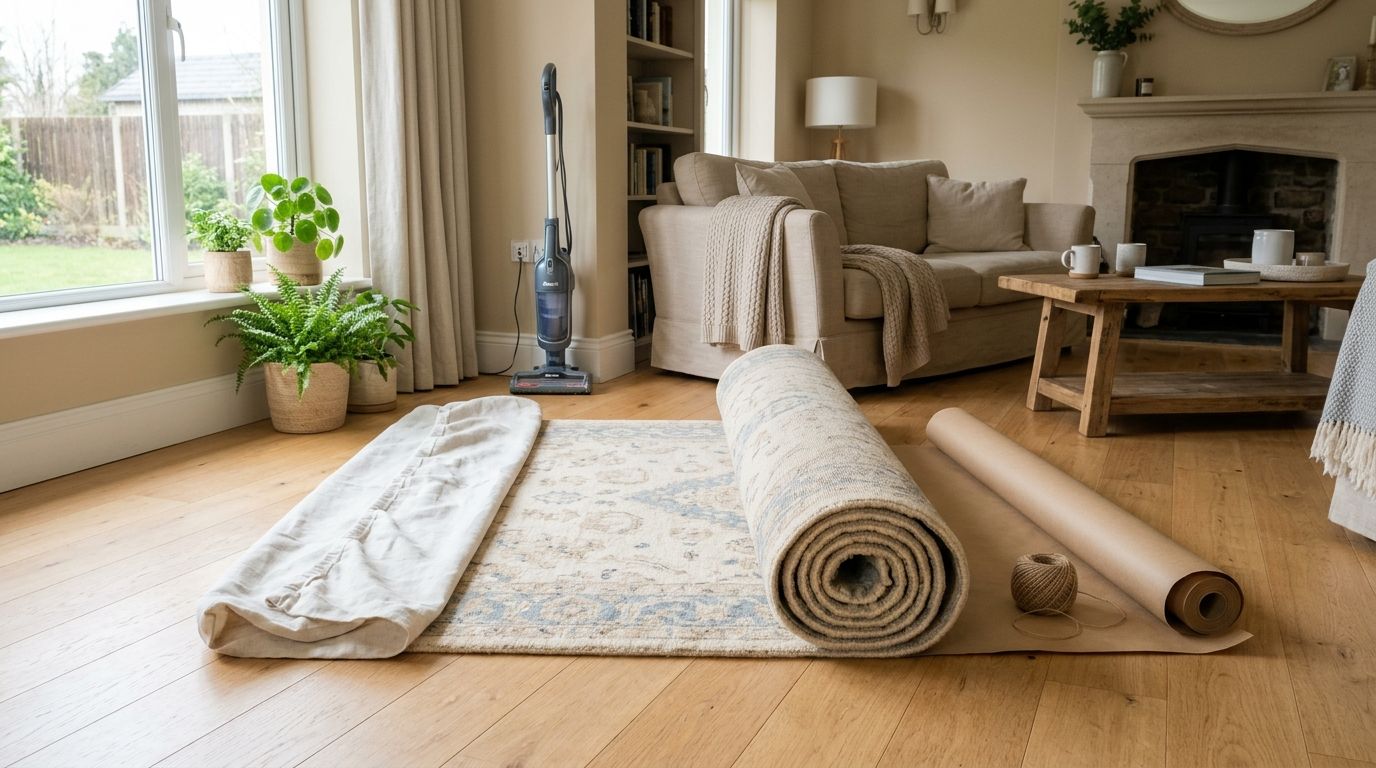
Should You Clean a Rug Before Putting It Into Storage? What to Do First
By Dmitrii Bamboo • November 9, 2026
Should you clean a rug before storing it? Learn how to vacuum, treat stains, dry, roll and protect your rug before long-term storage.
Wool rug drying flat on a rack in a ventilated room
By Go Green Cleaning • November 9, 2026
Learn how to dry a wet wool rug safely in a Meath winter, avoid browning, dye bleed and musty smells, and know when to call Go Green Cleaning for a quote.
Should You Clean Your Carpets Before Selling Your Home? What Buyers Notice First
By Dmitrii Bamboo • November 2, 2026
Preparing your home for sale? Discover how carpet condition, stains and odours affect buyer impressions — and when professional cleaning is worth considering.
Removing mud stains from a hallway carpet in a Kildare home with a damp white cloth
By Dmitrii Bamboo • November 2, 2026
Removing mud stains from hallway carpets in Kildare, Dublin and Meath is easier with the right method. Learn how to avoid damage, then book a clean with us.
Home Cleaning Guide

You dust the shelves, vacuum the floors and wipe every visible surface — then a day or two later, a thin grey layer seems to have appeared again.

It can feel as though all that cleaning achieved very little.

The reality is that dust is constantly moving through a home. Some of it comes from outside, while some comes from fabrics, furniture, everyday activity and particles already sitting in places that are rarely cleaned.

Dust returning quickly does not always mean the house is dirty. Often, it means the cleaning removed what had already settled without addressing where the next layer is coming from.
Couple cleaning a bright living room to remove dust from floors and household surfaces
Dust can continue moving through a room even shortly after visible surfaces have been cleaned.
01 · DUST IS ALWAYS MOVING

Cleaning Removes Settled Dust, Not Every Particle in the Room

Dust does not remain permanently attached to one surface.

Walking through a room, opening curtains, sitting on a sofa or moving bedding can disturb fine particles and send some of them back into the air.

Those particles eventually settle again on furniture, floors, shelves and electronics.

This is why a freshly cleaned surface can sometimes develop a visible layer again surprisingly quickly.

02 · CLEANING ORDER

You May Be Cleaning in the Wrong Direction

Cleaning order makes more difference than many people realise.

If you vacuum the floor first and then dust shelves, wardrobes, lamps and window ledges, some of what you remove from those higher surfaces can simply fall onto the clean floor.

The same applies when shaking cushions, changing bedding or cleaning curtains after the rest of the room has already been finished.

Higher surfaces → Furniture → Lower surfaces → Vacuum → Floor last

Working from top to bottom reduces the chance of repeatedly dirtying areas you have already cleaned.

03 · HIDDEN SURFACES

Dust May Be Sitting in Places You Rarely Clean

Visible shelves and tables are only part of the picture.

Dust can collect on top of wardrobes, behind televisions, beneath beds, around radiators, along skirting boards and behind furniture.

These areas may remain untouched for weeks or months.

Air movement and everyday activity can gradually disturb this older dust and move it back into the room.

Tops of wardrobes and cabinets
Behind televisions and monitors
Under beds and sofas
Radiators and skirting boards
Window frames and curtain areas
04 · FABRICS

Sofas, Rugs, Curtains and Bedding Can Hold Dust Too

Hard surfaces make dust easy to see. Soft furnishings can hide much more of it.

Sofas, rugs, carpets, curtains, cushions and bedding all collect fine particles during normal use.

When people sit down, walk across a rug or shake out bedding, some of those particles can become airborne again.

Vacuuming floors alone may not be enough.

Regular attention to upholstered furniture, rugs and other textiles can help reduce some of the dust being continually redistributed around the room.

Person removing dust from a television screen during routine home cleaning
Electronics and nearby surfaces can make newly settled dust especially easy to notice.
05 · OUTDOOR DUST

Some of the Dust Is Coming From Outside

Open windows and doors allow fresh air into a home, but they can also allow fine outdoor particles to enter.

Dirt can also arrive on footwear, clothing, bags and pets before being transferred onto floors and furniture.

Homes close to busy roads, construction work or other dusty outdoor environments may notice this more quickly.

This does not mean windows should never be opened. It simply explains why some homes naturally need more frequent dusting than others.

06 · VACUUMING

Your Vacuum Cleaner Can Affect the Result

Vacuuming is one of the most useful ways to remove settled dust, but the condition of the machine matters.

An overfilled dust container, blocked filter or poorly maintained vacuum can reduce cleaning performance.

If suction has noticeably weakened, more material may remain behind in carpets, rugs and along room edges.

Check and maintain the vacuum according to the manufacturer's instructions rather than assuming the machine is working at full performance simply because it still turns on.
07 · DRY DUSTING

Sometimes You Are Moving Dust Instead of Removing It

A quick pass with a dry cloth or feather duster can make a surface look better immediately.

However, depending on the tool and technique, some fine particles may simply be pushed from one place to another or lifted back into the air.

Using a suitable cloth and cleaning method that actually captures the dust can reduce how much is redistributed around the room.

The goal is not just to make the shelf look clean — it is to physically remove the dust from the room.

08 · CLUTTER

More Objects Mean More Places for Dust to Settle

Shelves filled with decorative items, cables, books, frames and small objects naturally take longer to clean properly.

Dust can collect around and behind these items while only the most visible surface gets wiped.

Over time, those small missed areas add up.

You do not need to remove every decorative item from your home, but occasionally clearing a shelf completely makes it easier to clean the surface properly rather than simply dusting around everything.

A Better Routine

How to Keep Dust Away for Longer

Dust will always return eventually. The realistic goal is to slow down the build-up and remove more of it each time you clean.

Work from top to bottom so falling dust is collected later.
Vacuum soft furnishings as well as the floor.
Clean hidden areas periodically rather than only visible surfaces.
Maintain your vacuum cleaner so it continues working effectively.
Use methods that capture dust instead of simply pushing it into the air.
When Weekly Cleaning Isn't Enough

Sometimes the Dust Is Coming From Months of Build-Up

If the home becomes dusty again almost immediately despite regular cleaning, there may be a significant amount of older dust sitting in less accessible areas.

This is especially noticeable in homes where the tops of furniture, spaces beneath beds, radiators, skirting boards, upholstery and other overlooked areas have not been cleaned thoroughly for some time.

A deeper clean tackles more of these areas at once instead of repeatedly wiping the same visible surfaces.

That does not mean a home should remain permanently dust-free.

It simply reduces the amount of old material available to be disturbed and redistributed after cleaning.

The Bottom Line

Dust Coming Back Is Normal — Coming Back Immediately Is a Clue

A completely dust-free home is not realistic, because new particles are constantly entering and moving around the space.

But when surfaces look dusty again very quickly, it is worth looking beyond the shelf itself.

Cleaning order, hidden areas, textiles, outdoor particles and the way dust is being removed can all affect how quickly that new layer appears.

Removing more of the dust at its source usually works better than simply wiping the same visible surfaces more often.

Go Green Cleaning

Give Your Home a More Thorough Reset

Go Green Cleaning provides professional deep cleaning services across Dublin, Kildare and Meath for homes that need more than routine surface cleaning.

A deep clean can help tackle dust in the areas that everyday cleaning often misses, including furniture edges, skirting boards, accessible hidden spaces and heavily used rooms.

Deep Cleaning Get a Free Quote →